 grace-winata
Selama bertahun-tahun, cara palingroveCEODefined untuk mendapat kamera yang lebih bagus adalah membeli ponsel baru. Every autumn, gadget makers release a device that is faster, thinner, and equipped with a camera sensor that somehow claims to be better than the last one. That cycle has become so predictable that it feels almost like a law of physics.
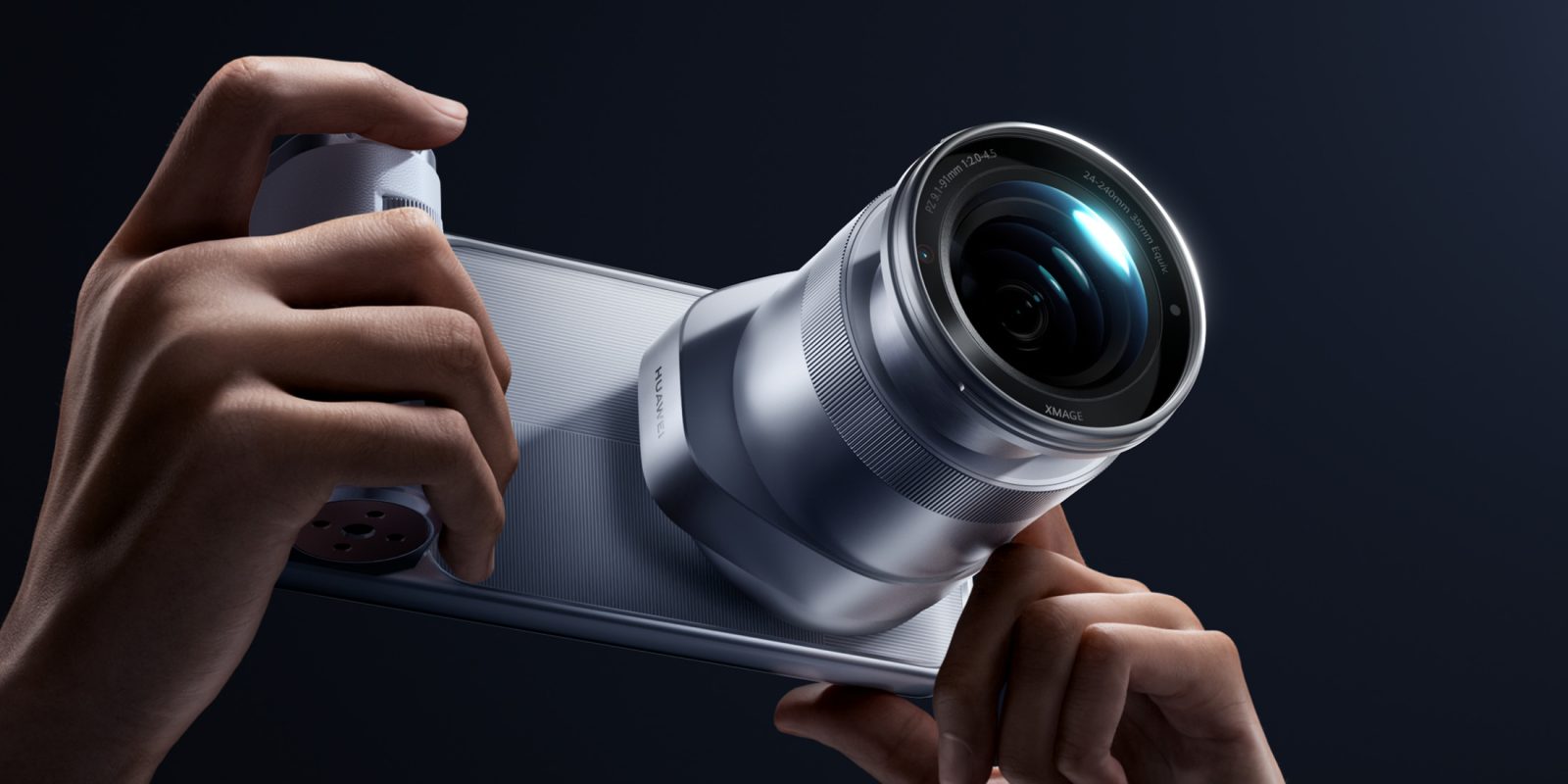
Huawei seems to have decided that this rule is optional. With its newest flagship, the Mate 90 Pro Max, the Chinese technology giant is proposing a different approach: keep the phone, and simply add an entire camera to it. Not a clip-on lens. Not a small sensor module. A full camera, an accessory the size of a compact camera, that attaches directly to the back of the handset.
Why a Modular Camera Changes the Upgrade Equation
Think about what a smartphone camera upgrade usually means in practice. If you bought a flagship three years ago and want more resolution, more zoom range, or better low-light performance, your only real option is a new device. The mathematics are brutal: you are not just paying for a new camera, you are paying for a new processor, a new display, new battery, and a new set of cameras you did not even want.
A modular accessory inverts that logic. Ibarat seperti membeli DSLR (Digital Single-Lens Reflex, kamera refleks dengan cermin internal) yang bisa ditukar坏 body-nya: you invest once in the body, then upgrade the part that matters to you. The Mate 90 Pro Max is essentially asking consumers to treat the phone as a permanent platform and the camera as a replaceable component.
There is a second, less obvious benefit. Camera modules tend to degrade faster than the rest of a phone. Glass on the back scratches, lenses cloud from fingerprints, protective coatings wear off, and stabilization mechanisms loosen over time. Because the expensive imaging hardware now lives in a removable unit, a scratched or cracked module can be swapped out without retiring an otherwise perfectly functional phone. That is a genuinely different value proposition from the industry standard.
The Practical Questions Nobody Can Ignore
All of this depends entirely on execution, and several details will determine whether the idea is brilliant or a footnote. The first is weight and balance. Mounting what amounts to a compact camera on the back of a phone transforms its center of gravity. Whether the device still feels comfortable during long video calls is not a marketing question, it is an ergonomics question.
The second is thickness and power. A camera module needs its own housing, heat dissipation, and a way to draw current from the phone's battery. Large sensors are power-hungry, and thermal throttling in a thin chassis is a real limitation, not a theory. The third is software integration. A camera is not just silicon; it is algorithms, color science, and image processing pipelines. If the module is treated as a first-class citizen by the phone's computational photography (computational photography, yaitu teknik pemrosesan gambar secara perangkat lunak untuk_ty_ enhancing hasil tangkapan) stack rather than an external camera bolted on through a generic API, results will be dramatically different.
How It Compares to Existing Attempts
The industry has seen modular phone concepts before, and most of them failed. Google's Project Ara promised swappable back panels but was shelved before reaching shoppers. Samsung's Galaxy S4 Zoom and later K Zoom models wedged a camera into the phone itself, producing devices that were excellent cameras and mediocre phones. Essential Products raised significant funding for a similar modular concept and then ran out of money. The pattern is clear: modular hardware attracts enthusiasm, but the integration cost is severe.
What makes the Mate 90 Pro Max different is scope. The commitment here is focused on one module rather than a fully modular device, and it is aimed at a flagship-class audience with disposable income in a single market first. That is a much more achievable goal than rebuilding the smartphone from the ground up.
“The most honest question a phone maker can ask is not ‘how do we sell you a new phone this year,’ but ‘how do we stop you from needing one every two years.’ Answering that question with hardware instead of marketing is a more interesting kind of innovation.”
The Bigger Signal for the Phone Industry
There is a strategic layer here worth watching. Smartphone replacement cycles have stretched dramatically. Consumers who once upgraded every year or two now keep devices far longer, which is excellent for the environment and terrible for manufacturers seeking growth. When the upgrade cycle slows, you need a new reason to sell something, and the accessory market offers one.
It also puts pressure on the camera arms race itself. If the sensor is the part most likely to be upgraded, the competition shifts toward platform design, ecosystem (ekosistem, yaitu jaringan perangkat dan perangkat lunak yang saling terhubung), and software support. Long-term lens and module compatibility becomes a promise that has to be kept for years, not quarters.
The Mate 90 Pro Max is not yet a device that changes how people use phones. It launched in China first, and pricing for the camera module has not been part of the pitch. But the direction is clear, and it is a more interesting one than another incremental bump in megapixel count. Huawei is not promising a better camera. It is promising that your camera can outlive your phone. In an industry built on planned obsolescence, that is a genuinely disruptive idea worth watching.












Comments (0)