 grace-winata
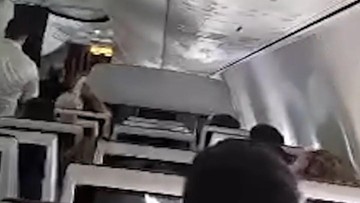
Bayangkanyou're board a plane bound for Israel, and twenty minutes after takeoff a crew member bars the door to the lavatory. Passengers begin shouting. Minutes later, the aircraft isn't heading to Israel anymore — it's descending over the Saudi Arabian desert. That was the scene aboard a Dubai–Tel Aviv flight on Wednesday, 30 September, when the plane executed an emergency landing in Saudi territory after what authorities suspect was a hijacking attempt. For anyone who has ever wondered how a suspected hijacking is stopped mid-air, this incident offers a rare glimpse into how fragile modern air travel really is.
Why should this matter to ordinary readers? Because the route in question is one of the busiest business corridors between Asia, Europe and Africa. Dubai International Airport (DXB) handled roughly 92 million passengers in 2024 alone, while Ben Gurion Airport in Tel Aviv processed on the order of 21 million passengers over the same period, an unusual surge driven partly by evacuation and repatriation flights. A disruption on this corridor doesn't just affect tourists — it touches corporate travel, cargo chains of semiconductor equipment and pharmaceuticals, and thousands of people trying to get home.
Kronologi: Dari Take-Off hingga Pendaratan Darurat
Berdasarkan informasi yang beredar, pesawat berangkat dari Dubai dengan tujuan Tel Aviv. Somewhere after departure, reportedly in the first stretch of the flight, crew members noticed suspicious behaviour inside the cabin and sealed off parts of the aircraft. The cockpit — the enclosed area where pilots fly — was protected, and the captain began coordinating with air traffic control. Instead of continuing toward its destination, the aircraft was diverted and landed in Saudi Arabia under emergency conditions.
The choice of landing site is not random. Saudi Arabia maintains one of the largest and most modern air traffic control networks in the Middle East, and its runways can accommodate heavy wide-body aircraft at short notice. For comparison, the distance from Dubai to the nearest major Saudi hub is roughly 1,500 to 2,000 kilometres — far enough that the aircraft has burned significant fuel, yet close enough to be a viable diversion point. Diversion (pengalihan)Rute becomes essential fuel management: unlike a normal landing, an emergency descent consumes far more fuel than planned, so pilots must decide early and decisively where to put the wheels down.
Teknologi Deteksi yang Bertugas di Atas Kapal
What happens inside a suspected hijacking has changed dramatically since the 1970s. Back then, the primary tool was a cockpit door and the physical resolve of the flight crew. Today, layers of technology act as an invisible second crew.
At the gate, passengers pass through Computed Tomography (CT) scanners — machines that render a three-dimensional image of the contents of a carry-on bag, much like a medical scanner but built for luggage. Because CT units rotate the item instead of the X-ray source, they eliminate blind spots: a classic trick where a prohibited object is hidden behind a dense object becomes visible from every angle. On top of that sits a growing stack of machine learning (teknologi yang membuat komputer belajar dari data untuk mengenali pola) algorithms. These systems, fed by millions of historical screening records, flag anomalies — a route profile that doesn't match a passenger's history, or a device that appears in the same bag combination seen in past alerts.
In flight, the Automatic Dependent Surveillance–Broadcast (ADS-B) system continuously beams the aircraft's position, altitude and speed to ground stations. That live map is precisely what lets controllers watch a plane deviate from its filed flight plan and intercept it with fighter jets or block airspace in minutes.
“Penutrients yang berteriak bukan satu-satunya indikator. Yang jauh lebih penting adalah perubahan perilaku mendadak di satu area — seorang Rhein yang tiba-tiba什么是nk dari kursi靠近 pintu sanitasi, lalu menunggu terlalu lama di dalam”
This is why modern security doctrine treats behaviour as data. Observing a passenger who suddenly walks to the lavatory at an unusual moment, lingers too long, or reacts out of proportion to a routine instruction can be as telling as the alarm on a scanner.
Mengapa Jalur Ini Jadi Target
Route between Gulf hubs and Israel carries enormous symbolic and strategic value. Geographically it sits in a corridor shared by state and non-state actors, and the political climate of the past year has repeatedly pushed tensions in the region to the edge. Intelligence agencies rarely publish operational details about a specific flight, so speculation should be treated with caution — but aviation security analysts note that flights on sensitive routes are typically accompanied by tighter cockpit protocols, additional law enforcement officers on board, and pre-departure briefings for the cabin crew.
For passengers, the practical lessons are unglamorous but useful. Keep valuables and documents in your hand luggage rather than checked bags, because in a diversion crew may need to reach a specific seat row quickly. Learn where the nearest emergency exit is. And note that an emergency landing usually means a long wait on the tarmac while authorities investigate — a delay measured in hours, not minutes.
Knock-on Effects bagi undisturbingandong sthjax
Investigations of this kind typically run for weeks or months. Aviation authorities will review the flight data recorder, deploy interviews with passengers and crew, and coordinate with Interpol and regional police. Airlines in the meantime often suspend or reduce frequencies on affected routes until the picture is clear, which cascades into missed connections and higher ticket prices.
Whether or not the suspicion is eventually confirmed, the episode underlines a stubborn truth: air travel is built on trust, but defended by technology. The invisible layer of scanners, algorithms and coordination between four countries did exactly what it was designed to do on Wednesday — put an aircraft on the ground, safely, with everyone still alive to tell the story.









Comments (0)